How Gym Mirror Placement Quietly Affects Form Confidence for Plus-Size Beginners
Quick Answer: Mirrors are genuinely useful for checking exercise form, but for many plus-size beginners still building comfort in a gym space, constant mirror exposure can add a layer of self-consciousness that actually distracts from focusing on technique — using mirrors selectively, rather than avoiding or overusing them, tends to work best.
The goal isn’t to fully avoid mirrors or stare at them constantly — it’s using them at the right moments.
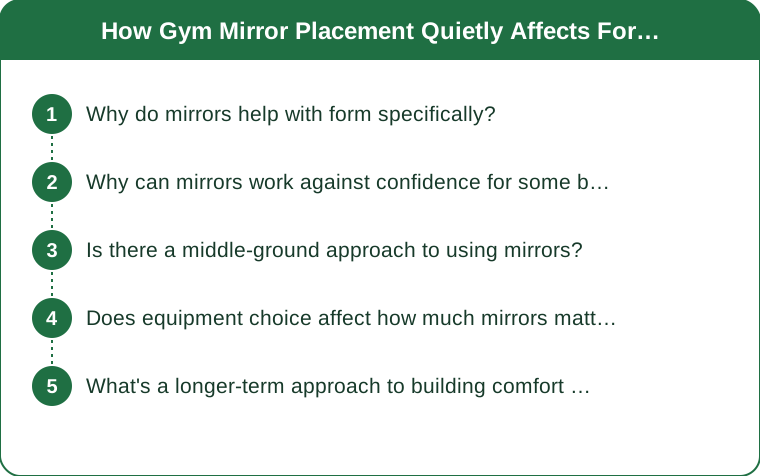
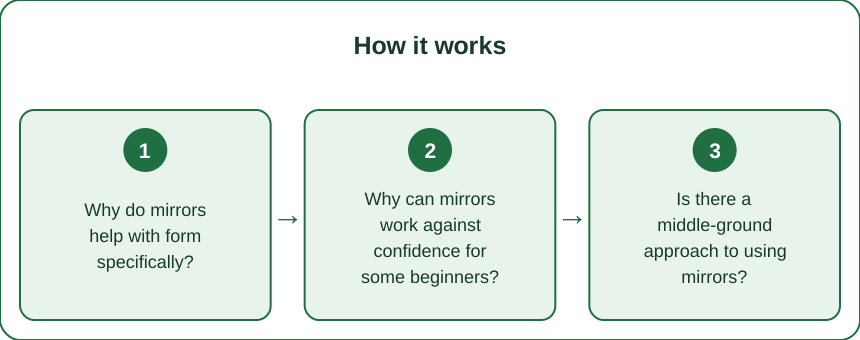
Why do mirrors help with form specifically?
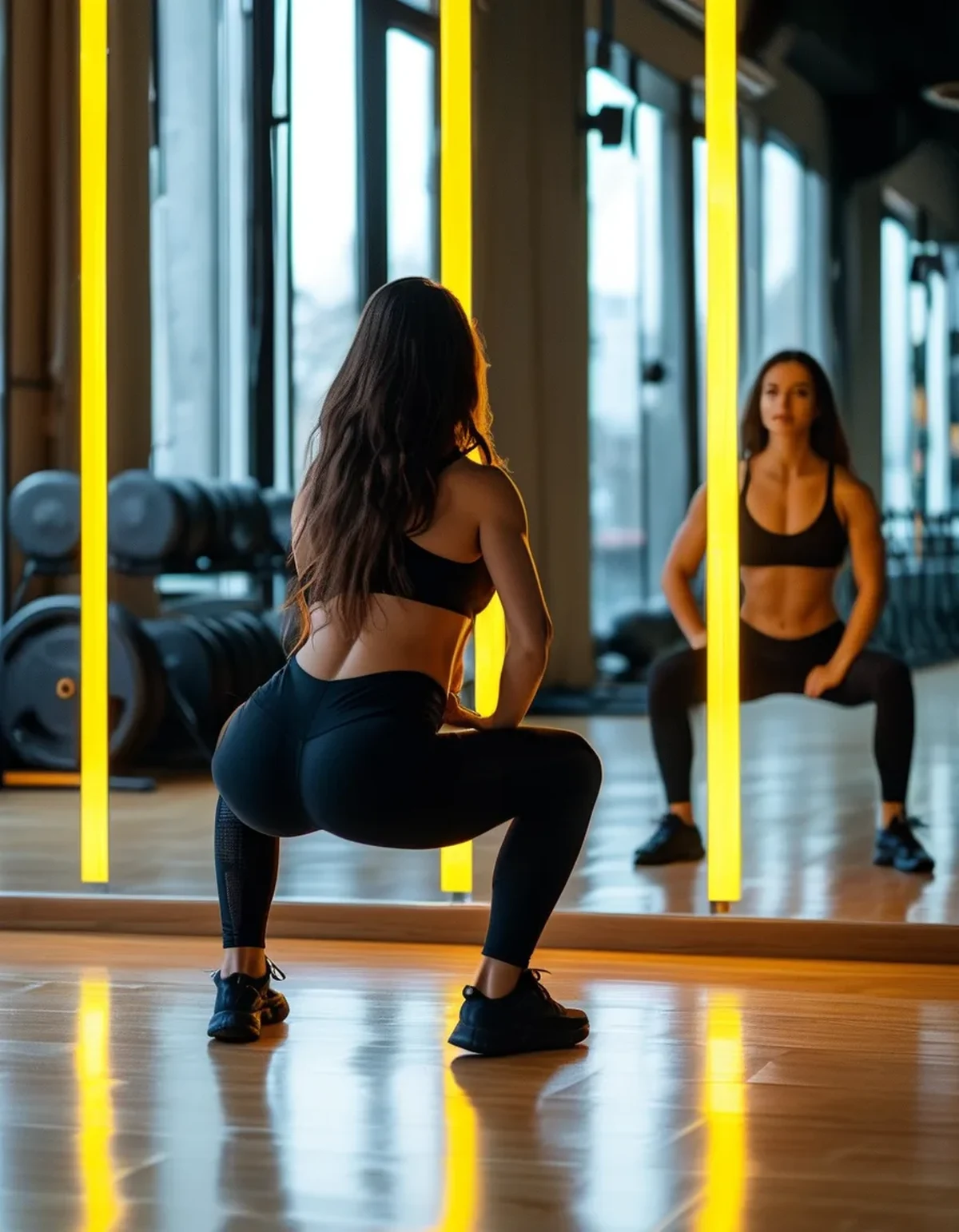
Visual feedback on alignment — knee tracking, back position, bar path — is often faster and more reliable than trying to feel whether a movement is correct, which is part of why mirrors remain a standard tool in gym design despite the self-consciousness they can add for some beginners.
Why can mirrors work against confidence for some beginners?
Continuous visual self-monitoring during exercise, especially in a body someone is still building comfort with in a gym setting, can shift mental focus away from the movement itself and toward self-evaluation, which tends to reduce both performance and enjoyment of the session.
Is there a middle-ground approach to using mirrors?
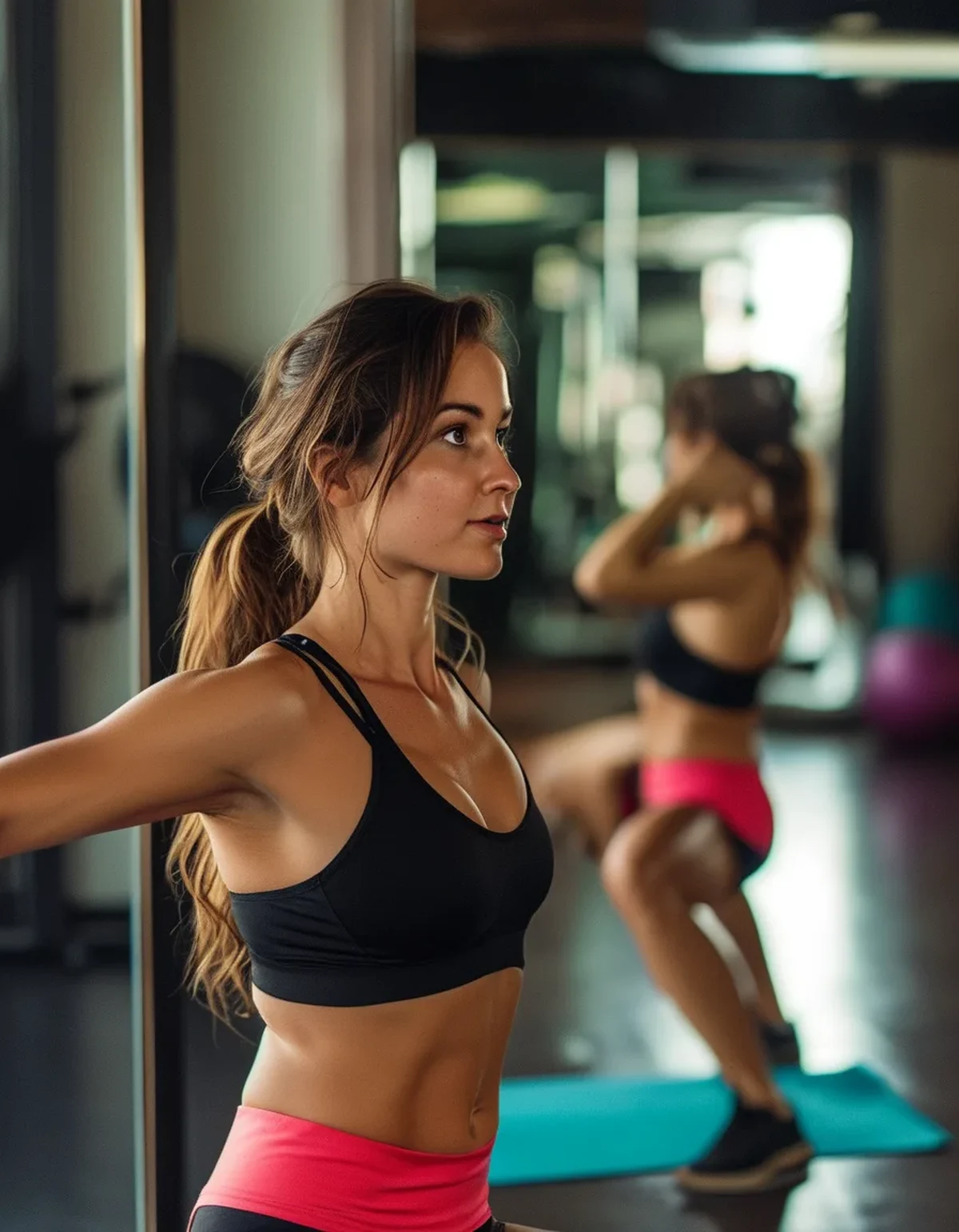
Yes — many trainers suggest checking form in the mirror briefly at the start of a new exercise or a few reps into a set, then shifting focus away from the mirror and onto internal cues (like feeling the movement) for the remainder, rather than watching continuously throughout.
Does equipment choice affect how much mirrors matter?
Somewhat — machines with guided paths of motion need less mirror-based form checking than free weights, so beginners still building mirror comfort might reasonably prioritize machines early on and introduce mirror-dependent free-weight form checks more gradually.
What’s a longer-term approach to building comfort with gym mirrors?
Comfort with mirrors, like comfort with any new gym environment, tends to build gradually with repeated exposure in low-pressure conditions — many beginners find that after a few consistent weeks, the mirror becomes a neutral tool rather than a source of self-consciousness.
TL;DR:
- Mirrors provide genuinely useful form feedback that internal cues alone can’t always match
- Continuous mirror-watching can pull focus toward self-evaluation instead of technique
- Brief form checks followed by internal focus is a workable middle ground
- Comfort with mirrors tends to build naturally with consistent gym exposure over time
The mirror is a tool to use strategically, not something to fully embrace or fully avoid.
Keep Reading
This article is for general informational and styling purposes only. Fit, sizing, and product availability may vary.
